


PTZ Camera for Perimeter Security: IR Range, Detection Technology & Installation Guide
Shopify API
Jun 03, 2026
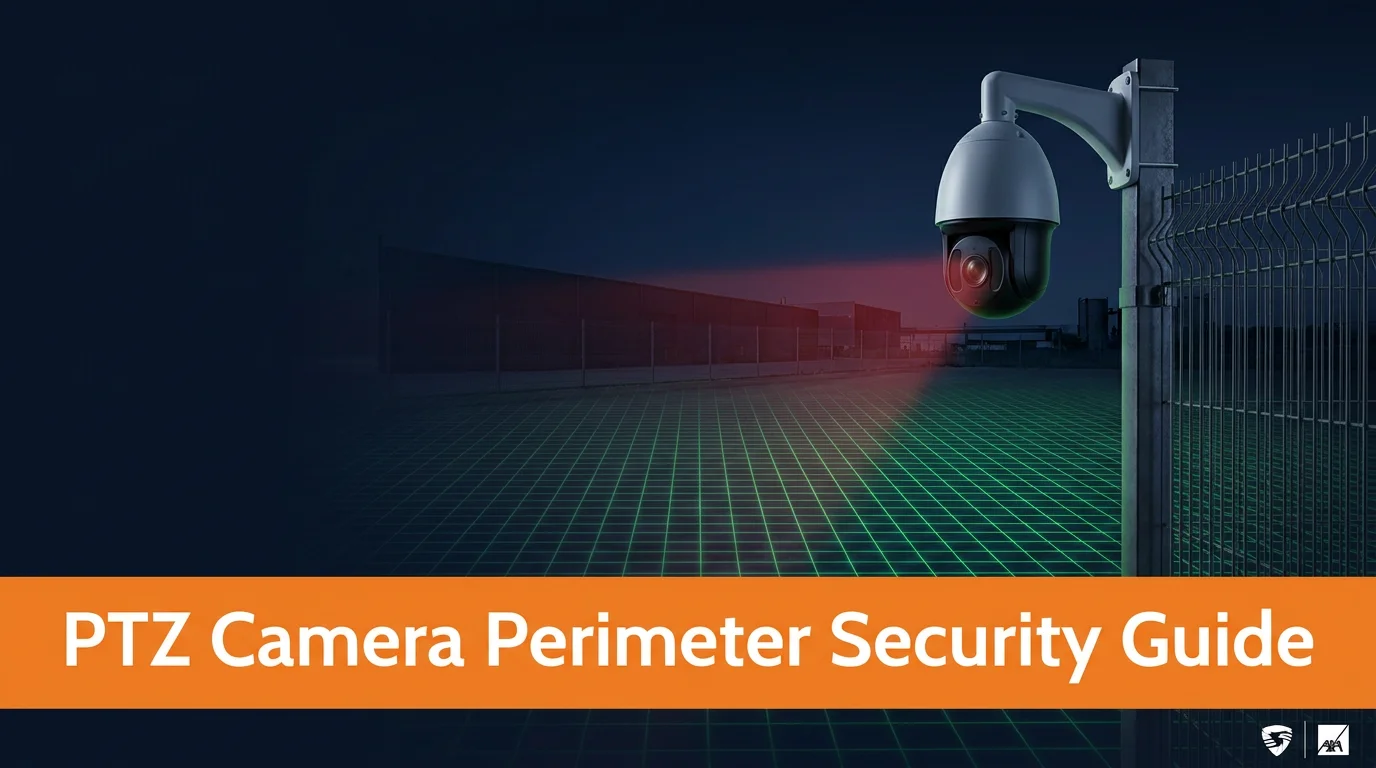
Perimeter security is one of the most demanding applications for PTZ cameras. An under-specified camera — insufficient zoom, inadequate IR range, or incompatible detection integration — creates blind spots in your security perimeter that cost far more to remediate after installation than to specify correctly from day one. This guide walks through every critical decision point.
The Three Perimeter Coverage Models
Match the coverage model to your site type and perimeter length before selecting any hardware:
Model 1 — Point-to-Point Monitoring (up to 200m)
Best for: fence lines at warehouses, utility substations, small commercial compounds.
- 20x optical zoom, 2MP or 4MP sensor
- IR illumination range: 100–150m
- Pan speed: 200°/s minimum for rapid incident response
- Preset positions: 8–16 patrol points
Model 2 — Zone Scanning (large compound perimeters)
Best for: solar farms, construction sites, logistics yards, industrial parks.
- 30x optical zoom, 4MP sensor
- IR illumination range: 200–300m
- Auto-patrol: minimum 32 preset positions
- Schedule-based patrol or motion-triggered scan-to-target
Model 3 — Long-Range Boundary Detection (critical infrastructure)
Best for: ports, airports, border surveillance, power plants, oil & gas facilities.
- 40x optical zoom, 8MP (4K) sensor
- IR illumination range: 300–500m
- Radar or AI perimeter detection integration
- Wiper + heater + blower + IP66 as standard
- Redundant power input recommended
💡 Coverage math: One 40x PTZ camera with 120° horizontal patrol range at 300m detection distance covers approximately 570 linear meters of perimeter. Plan camera spacing accordingly, with 20% overlap between zones.
Understanding IR Illumination Specs — What the Datasheet Doesn't Tell You
IR range figures on datasheets are measured under ideal laboratory conditions. Real-world performance depends on several factors most suppliers don't disclose upfront:
- Smart IR technology — automatically adjusts IR intensity to prevent close-range overexposure (critical for moving targets that approach the camera)
- 850nm vs 940nm wavelength: 850nm delivers longer range but produces a faint visible red glow at close range; 940nm is fully covert but achieves 20–30% shorter effective range
- Beam angle vs distance — a narrow-beam IR array covers longer distance but creates hotspot artifacts at close range; adaptive beam angle is the superior solution
- Ambient light impact — fog, rain, and dust reduce effective IR range by 30–60%; request performance data under adverse conditions
✅ Best practice: Always request a night-time sample video recorded at your exact required detection distance before signing any purchase order.
AI & Radar Detection Integration
Modern perimeter security projects increasingly require the PTZ camera to integrate with AI analytics or radar detection. Understand the three main architectures before specifying:
- Onboard AI (edge analytics) — human/vehicle/animal classification runs directly in the camera chip; lowest bandwidth, fastest response, but fixed algorithm set
- VMS-side AI — camera streams raw H.265 video to the platform; AI runs server-side; more flexible algorithm updates but requires higher bandwidth and server capacity
- Radar-triggered PTZ — radar detects intrusion and sends GPS/bearing coordinates to the PTZ via SDK or alarm I/O; camera automatically slews to track the target in real time — the most effective architecture for large perimeters
Confirm with your PTZ supplier whether the camera supports radar input via RS-485 alarm I/O or SDK before finalizing your system design.
Installation Bill of Materials (Typical Long-Range Perimeter Zone)
| Item | Specification | Notes |
|---|---|---|
| PTZ Camera | 40x / 8MP / 500m IR / IP66 | 1 unit per coverage zone |
| Mounting pole | 5–6m hot-dip galvanized steel | Height ≈ detection range ÷ 50 (rule of thumb) |
| Power supply | 24VAC / 60W / outdoor-rated enclosure | Or solar system for off-grid sites |
| Industrial PoE switch | PoE+ / IP67 / -40°C rated | Mount inside weatherproof cabinet |
| Surge protector | Video + data + power (3-in-1) | Critical for exposed outdoor poles |
| Fiber converter | Single-mode, 20km+ | For long cable runs to control room |
Get a Perimeter Security PTZ Consultation
Tell us your perimeter length, required detection distance, power availability, and VMS platform. Fengtaida's engineers will recommend the right configuration and send a project pricing sheet within 24 hours.
Request Perimeter Security Quote →
Share this post: